Overview
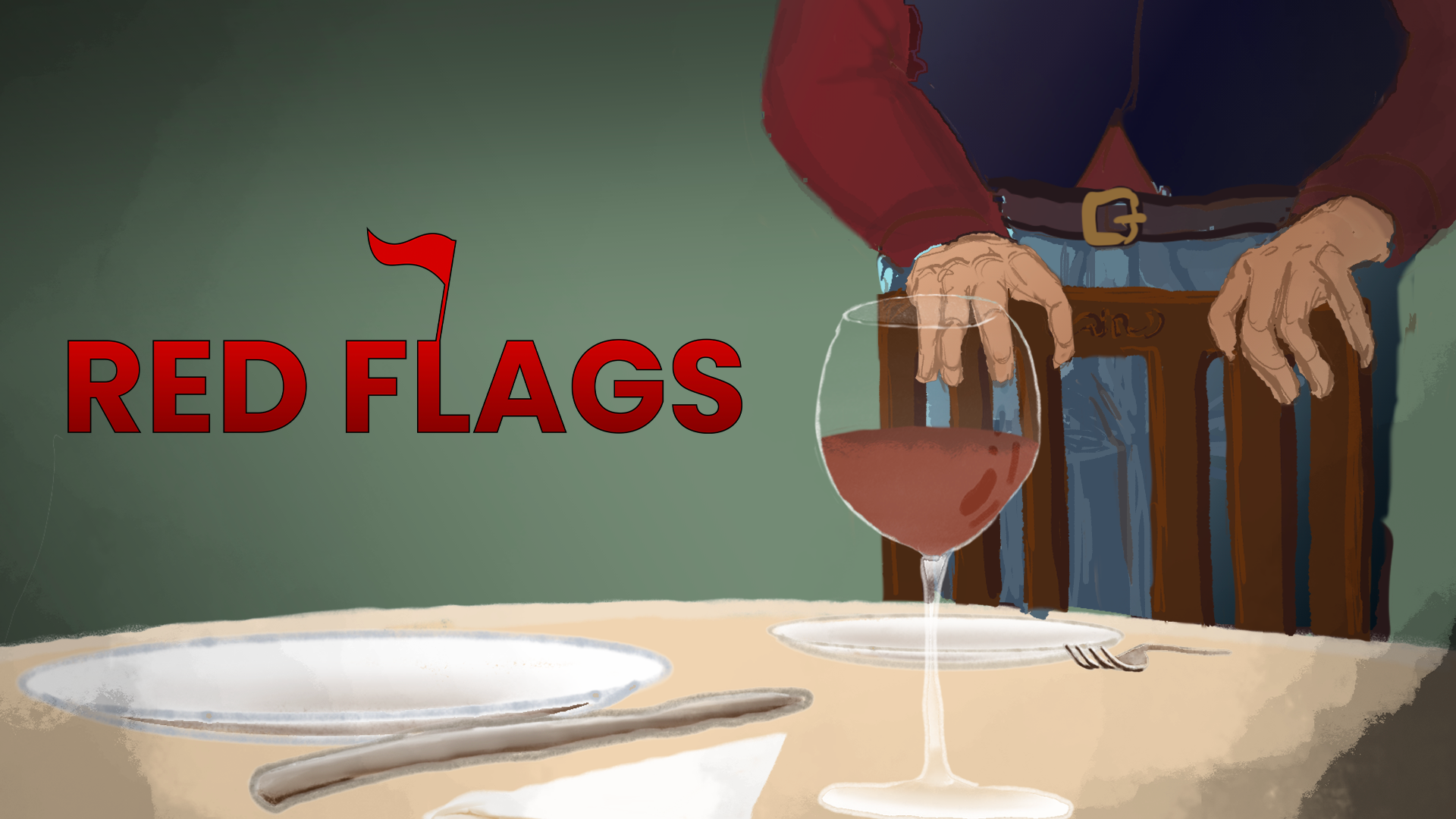
(Jan – May 2024) In my sophomore year at Marist University, I participated in the 2024 Global Game Jam. I collaborated in a group setting to develop an absurdist, comedic dating simulator titled Red Flags. The game can be downloaded for free (for Windows) on Itch.io.
You’re a grad student burdened with debt, and in a desperate attempt to keep the lights on, you opt for an unconventional method: going on dinner dates with rich men who will cover the check. The men, however, are some of the most outlandish playboys out there. And the only way to get what you want is to match their level of weirdness. So, throw on a nice outfit, fake a semi-convincing smile, and get ready to redefine “freaky” romance.
- Developed in Unity & C#
- Coded in Visual Studio Code
- Version Controlled through GitHub
- Implemented dialogue through YarnSpinner
Version Control & Project Management
From the kickoff of the Game Jam, I created a GitHub repository that was shared with all the team members.
This repo ensured the following:
- Members could actively collaborate on the same project
- Files could be accessed from one central location
- Developers could branch out / fork each other’s work for experimentation
My GitHub skills have improved tremendously since Red Flags, which you can see my work on Package Co. and Isles of Ethor.
GitHub repository cards by nwtgck.
As discussed in the many pull requests on the repository, I created several semantically-named branches for each feature/stage of the project.
- Development (dev)
- Inventory System (feat/inventory)
- Clues for Inventory (feat/clues)
- Documentation (docs)
- and more
Eventually, I grew to prefix my semantically-named branches with issue numbers to integrate them with GitHub Projects and Issues, which you can check out in Package Co. and Isles of Ethor!
In addition to gameplay programming, I also became the Project Manager, overseeing the other five contributors on the project. I met one-on-one with each group member several times to sketch out a timeline of deliverables.
Often times our meetings would be lead with the following three questions, framed in the perspective of the person I was speaking to:
- Where am I at?
- What do I need?
- What can Nicole communicate to the other teams (e.g. Writing, Art, Engineering)?
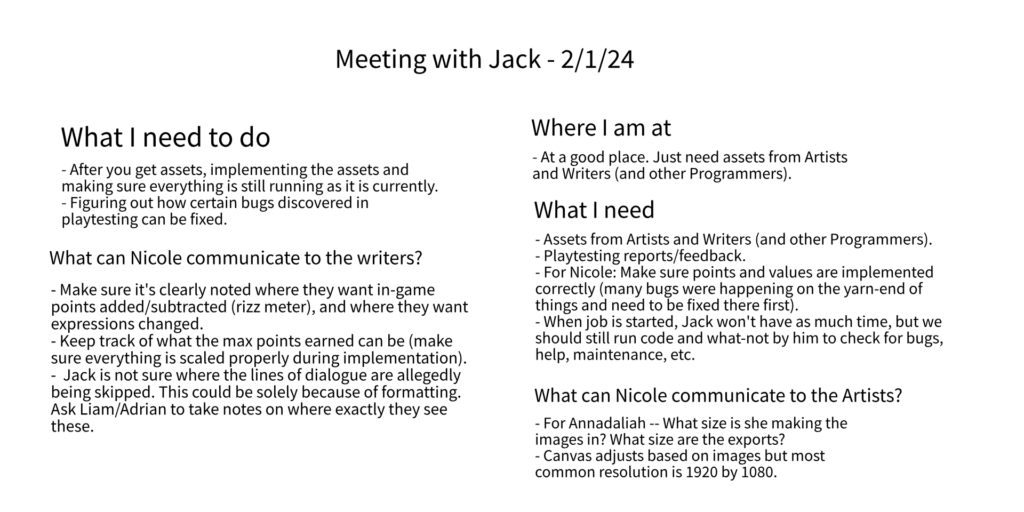
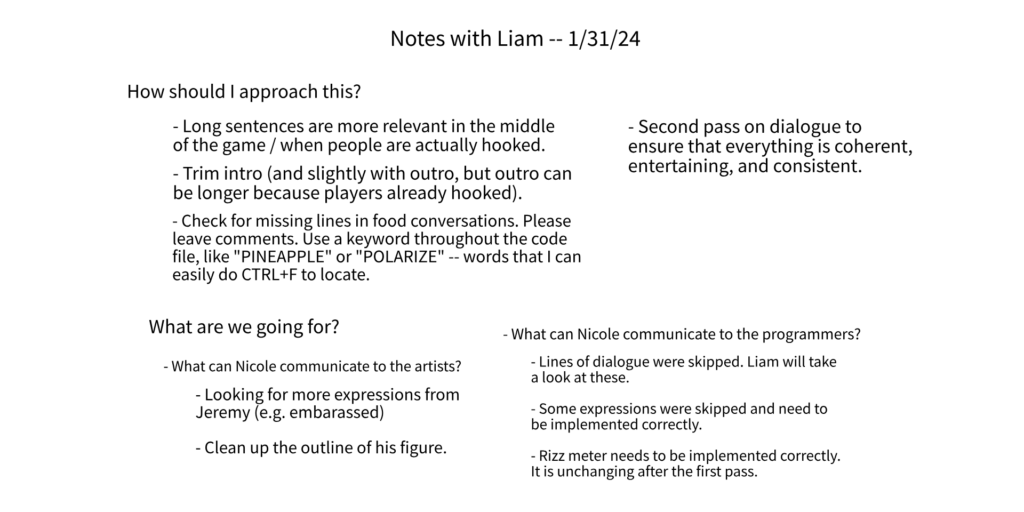
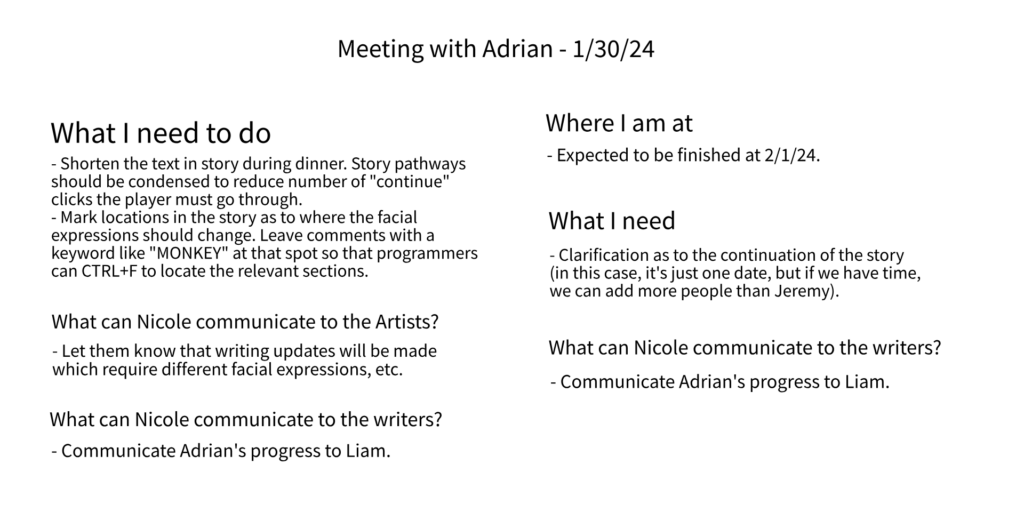
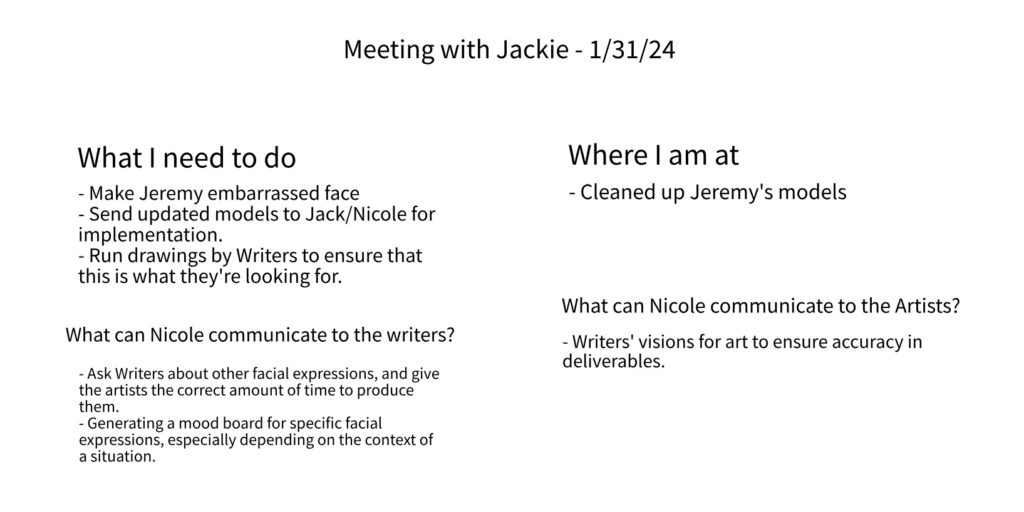
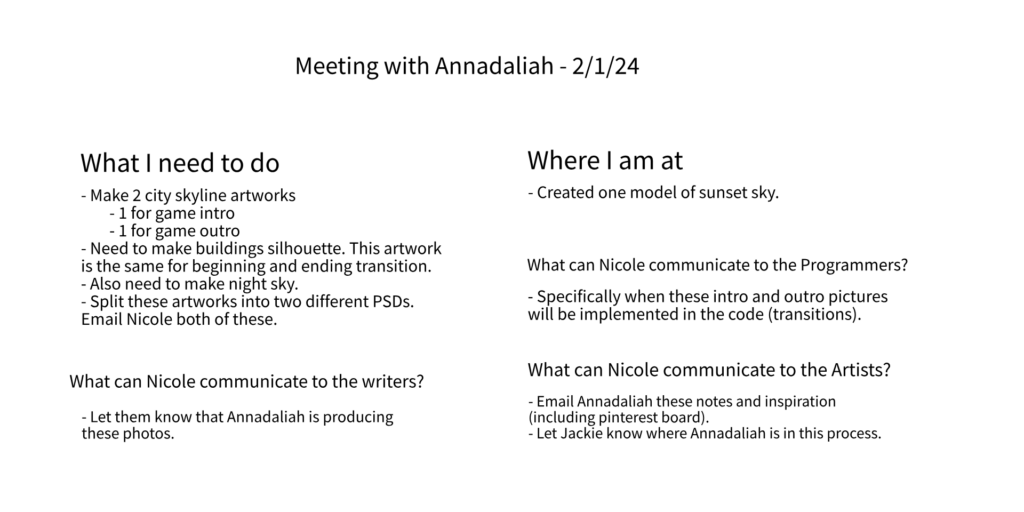
When you’re operating under a tight deadline, there’s overwhelming thoughts, questions, and concerns that can cloud the judgement and focus of the people working on the game. I handled this by pin-pointing clear, concise questions that could be translated into actionable steps.
Programming
The gameplay consists of Players performing narrative-based decisions to charm the bachelor of the evening, Jeremy, into paying the bill. As the Gameplay Programming, I utilized YarnSpinner & C# to systematically create a conversational gameplay loop.
My group and I utilized YarnSpinner to set up a simple dialogue system. However, with the continuously branching storylines, the script got a bit confusing.
To clarify programming-specific triggers, I devised a keyword system in which writers could go through the script and leave a code comment with a keyword that (A) does not appear in the script, and (B) is not a recognized programming term.
For instance, when changing the expression of the player’s date (Jeremy), the writers used the keyword “ALBATROSS” to indicate a needed update in the script.
This streamlined communication between writing and engineering and also made it significantly easier to understand the growing storyline.